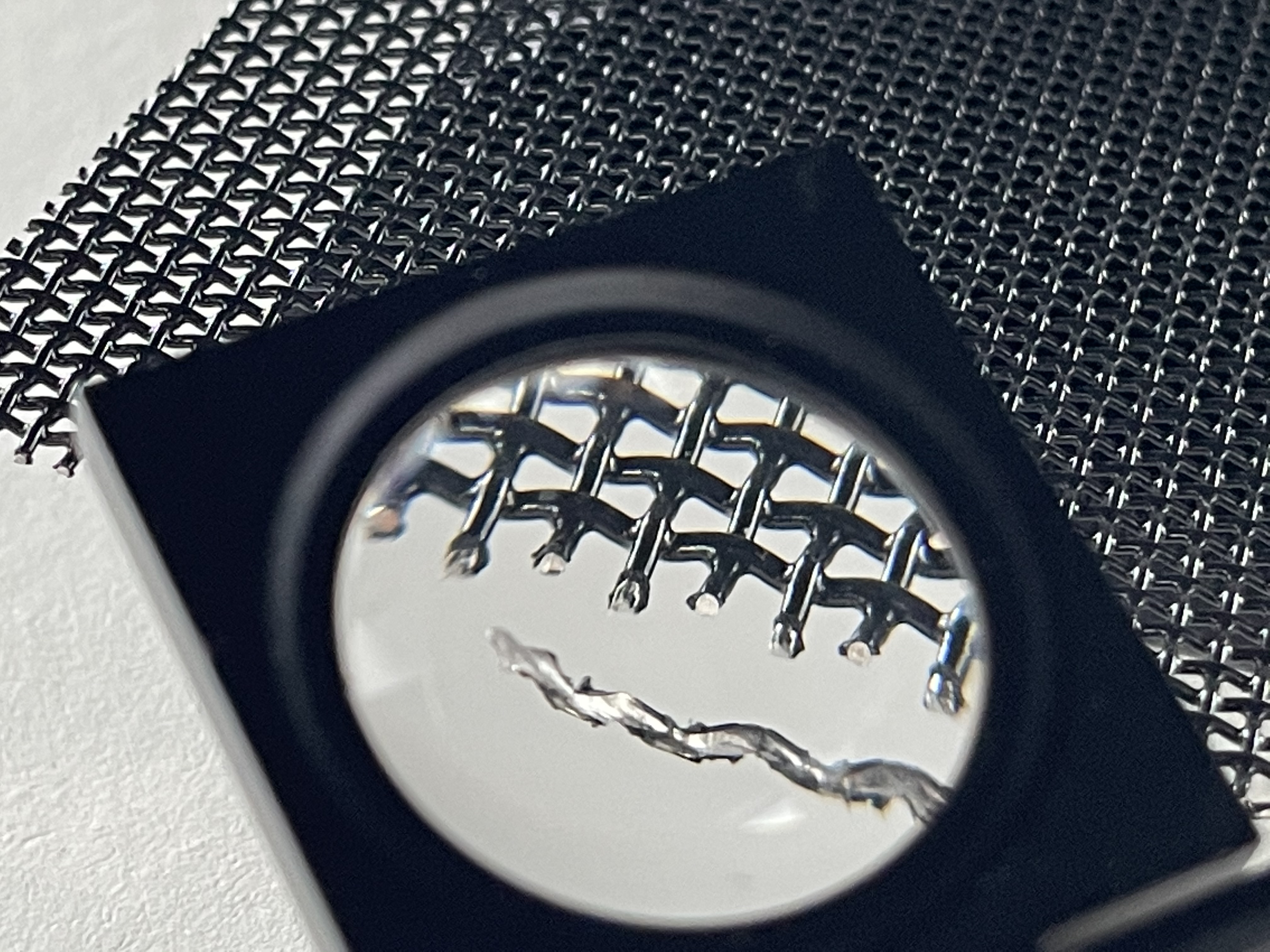
Finished with black powder coatings, 201 and 304 stainless steel security screens look nearly identical, making visual differentiation difficult. While both perform adequately indoors, the actual gap in durability emerges under prolonged exposure to humidity, rain, and coastal salt spray. Ji'an Screen Mesh details the expected rust timelines and environmental selection rules.
1. Material Durability and Initial Corrosion Triggers
Grade 201 Properties: Suitable for dry indoor settings, but low-cost variants suffer from reduced chromium and nickel content, showing rust specks quickly when edges are exposed or salt accumulates.
Grade 304 Advantages: Offers higher material stability and corrosion margins for exterior use; paired with pickling passivation and quality powder coating, it limits iron contamination and reinforces coating weak spots.
Vulnerable Areas: Corrosion typically initiates along cut edges, scratch marks, wire crossover points, bottom frames, and internal spline channels.
2. Coastal Environment Lifespan Benchmark (e.g., Zhoushan)
| Coastal Exposure & Maintenance | Grade 201 Rust Onset | Grade 304 (Passivated & Coated) |
|---|---|---|
| Under 500m (Direct sea breeze, no cleaning) | Approx. 3–12 months | Approx. 1–3 years |
| 0.5–5 km (No sea spray, occasional washing) | Approx. 1–2 years | Approx. 3–5 years |
| Over 5 km (No direct onshore wind, regular cleaning) | Approx. 2–4 years | 5+ years |
3. Specification and Maintenance
Standard residential builds should prioritize Grade 304, while heavy marine or low-maintenance applications should upgrade to 316L. Coastal properties are advised to rinse screens with fresh water every 2–4 weeks, focusing on bottom rails and corners to remove salt buildup.